Peregrine Falcons Falco peregrinus macropus are predators that hunt other birds and kill their prey at the end of spectacular high speed dives called "stoops". Peregrines do not build their own nest (eyrie) and normally lay eggs in a scrape on a cliff ledge. Peregrines are listed as "rare" across Australia and "vulnerable" in Victoria. Of the 642 Peregrine nests ever found in Australia, more than one third (270) are in Victoria. The Victorian Peregrine Project (VPP) is a unique and exciting voluntary conservation project involving more than 300 people across Victoria. Over 500 volunteer days are invested per year. The support of sponsors is both very much appreciated and essential to the continued success of this project.
The VPP is an exciting volunteer conservation initiative with three key areas of activity: Field research; community engagement and education; and developing innovative management techniques.
Research Results
A total of 1,523 chicks have been banded since 1991, to date 206 (14%) of these have been resighted later in life. Most raptor banding studies fail to gain more than a 7% reporting rate of birds after banding.
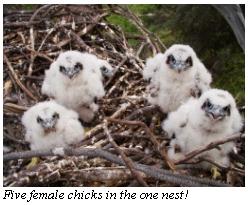 Whilst monitoring for the presence of bands on adults at nest sites we have found six sites where there is a second female in attendance. Where these were found wearing bands it showed that the second female had been raised at the site in the last year or two. This phenomenon is referred to as "Queuing" whereby the younger female does not leave the home territory and helps in raising the young in subsequent breeding seasons. Eventually when her own mother dies she stays on to breed. In 2005 we found a nest with five young in it. This is an Australian first as only 4% of our nests normally have as many as 4 chicks. This same site also had two females in attendance. Earlier in the season both were sighted incubating 2 and 3 eggs each side by side in the same nest. Such a level of co-operative breeding had not been recorded before with this species anywhere in the world. We have taken DNA samples from the chicks and will take DNA from each of the adults in 2006 to determine if both females laid eggs or not.
producing an
Australian record
5 Peregrines.
Recognition and peer review of the results is the next step in this process. To this end, VPP project leader, Victor Hurley has been accepted as a full-time PhD student at Deakin University and will be writing up and publishing the results of the VPP in 2006 and 2007. The overall theme of the thesis will be factors effecting the breeding success of Peregrines in Victoria.